
CATESTDistributed Agentic RAG
A distributed, Agent-driven RAG platform
purpose-built for code review and technical document translation.
OverviewProduct
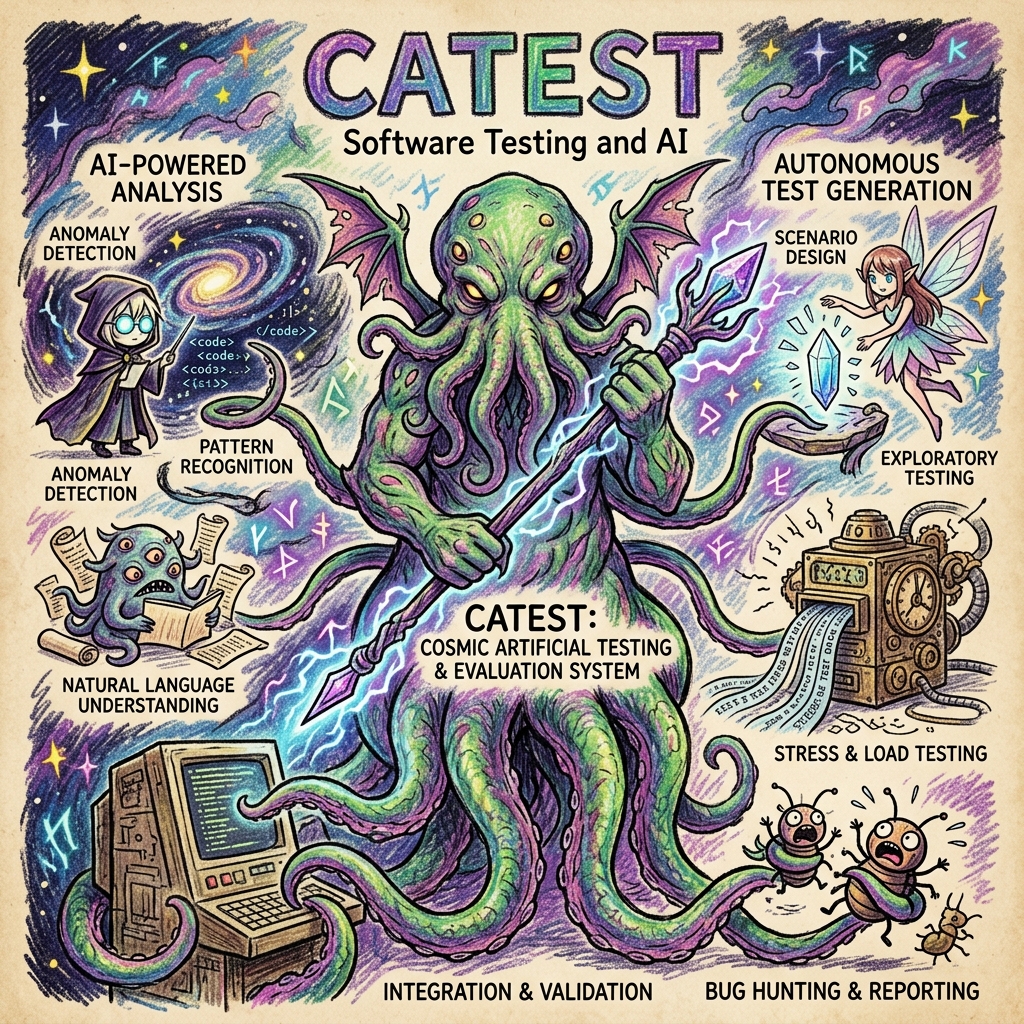
CATEST solves the isolated code block problem in conventional RAG by layering a knowledge-graph topology over the retrieved context — giving the model semantic awareness of how a function, type, or module relates to the rest of the codebase.
It recreates the dual-column workflow of professional Computer-Aided Translation (CAT) software, augmented by LangGraph intent routing that dynamically dispatches term libraries, rule libraries, translation memory, and knowledge graphs as the task demands.

Key FeaturesCapabilities

① Modular Agentic RAG
A LangGraph-driven intent routing engine that dynamically dispatches term libraries, rule libraries, memory, and knowledge graphs — feeding only the right context to the LLM at each step.

② Streaming Knowledge Ingestion
A near-real-time cleaning pipeline built on Apache Kafka and Arroyo (SQL Stream). Codebase changes flow straight into the vector store and graph database within seconds.
③ CAT-style Dual-column Workflow
Faithfully recreates the source/target side-by-side experience of professional translation tools, in a lightweight Next.js 14 + SQLite stack that runs comfortably on a workstation.
④ Distributed Rust Microservices
Every core component is written in Rust with Actix-Web: SQLx for relational access, rdkafka for streaming, neo4rs (Bolt) for graphs, and Tree-sitter for parsing — fast, safe, and concurrent by design.

⑤ Topological Context Awareness
A Memgraph relationship graph preserves the dependency structure between functions, types, and modules — eliminating the semantic loss that plagues naïve RAG when code is retrieved out of context.
Tech StackEngineering
- Frontend
- Next.js 14, Tailwind CSS, LangGraph.js, pnpm
- Backend
- Rust (Actix-Web), SQLx, rdkafka, neo4rs (Bolt), Tree-sitter
- Stream Processing
- Apache Kafka, Arroyo
- Databases
- PostgreSQL, Qdrant (Vector), Memgraph (Graph), SQLite
- AI Models
- Qwen2.5 (Ollama), e5-small, bge-reranker
- License
- AGPL-3.0
Architecture HighlightsDesign
Instead of S3-style object storage, CATEST uses a NAS-centric shared filesystem: the ingestion pipeline drops raw files onto shared storage, publishes a Kafka event, lets the parser fan out, and the vector/graph stores absorb the result — all asynchronously, all in-memory or in-page-cache where it matters.
Search logic lives in its own domain layer, unifying Qdrant similarity queries with Memgraph relationship traversal so the model gets both semantic and structural relevance.
Open SourceCommunity
CATEST is released under the AGPL-3.0 license.
Follow development and explore the source on GitHub.
Get in Touch
Technical questions, collaboration ideas, or licensing inquiries — we're happy to talk.